


The Challenge
Bank compliance leaders walked into 2026 facing what the session called twelve years of fair lending change in twelve months. An executive order directed agencies to eliminate disparate-impact liability wherever possible. The CFPB withdrew 67 guidance documents, then amended Regulation B itself. A state attorney general brought the first major enforcement action alleging bias in AI underwriting, settling for $2.5 million. And in April 2026, new interagency model risk guidance, SR 26-2, explicitly carved generative and agentic AI out of scope in a single footnote, leaving banks that deploy genAI in lending with no specific federal supervisory framework.
Meanwhile, the technology keeps arriving in vendor platforms, embedded features, and employees' browsers, and compliance officers are being asked to govern tools most have never used hands-on. Conference AI sessions are often part of the problem: passive, theoretical, and long on hype. For its flagship Risk & Compliance Conference in Charlotte, the American Bankers Association wanted something different: a session where fair lending professionals would actually work with the technology, not just hear about it.
The Approach
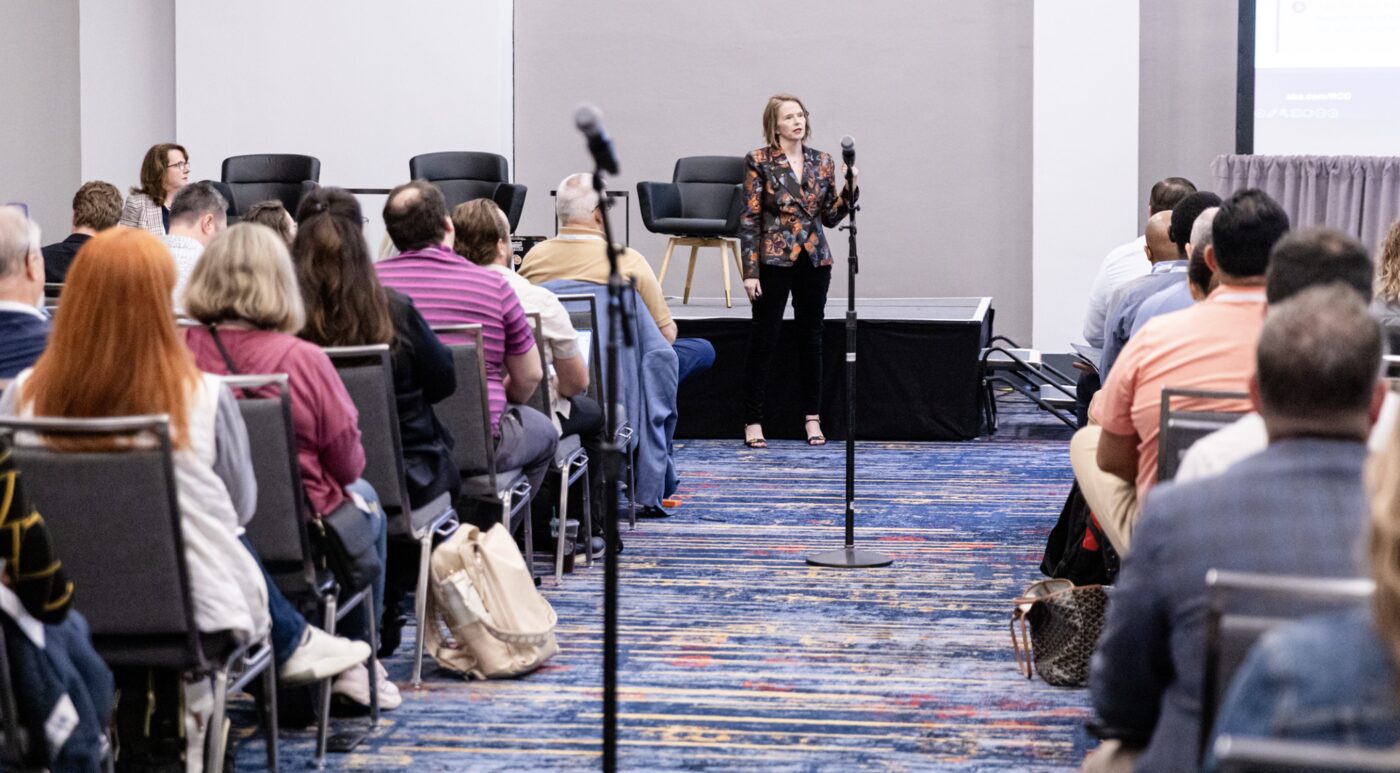
PhoenixTeam CTO Tela Mathias co-led "Optimizing Fair Lending Programs with AI" alongside Renee Huffaker, Executive Director of Enterprise Risk and Compliance at Arvest Bank, with Maureen Carollo, Fair Lending Manager at MidFirst Bank, moderating, a deliberate pairing of a daily genAI builder with practitioners who live the exam cycle.
The 90 minutes ran in thirds: foundations, labs, and conversation. The foundations segment gave the room shared language and honest framing: the case for and against genAI in regulated work, and a three-tier model separating decisioning (where the cost-benefit collapses), decision support (viable only with real governance and real human judgment), and decision-adjacent work (real efficiency, manageable risk). Attendees learned to place use cases on a matrix of regulated-decision exposure versus harm reversibility, and to assign bias-testing responsibility across four layers: application outcomes, input data and retrieval sources, human-in-the-loop behavior, and the foundation model itself.
Then the room went hands-on. Using QR-code links and whatever AI tool they already had (Claude, ChatGPT, Copilot, or Gemini), attendees ran two live labs on their own laptops and phones. In the first, they analyzed a 10,000-record HMDA LAR sample to surface trends and anomalies relevant to fair lending risk. In the second, they compared a loan dataset against a documented underwriting policy and flagged potential exceptions for human review. Starter prompts and a simple Role-Context-Task-Format framework got first-timers producing useful output within minutes, with "then explore" prompts pushing experienced users further.
The session closed with a moderated open conversation grounded in what attendees had just experienced: governance, exam readiness, and what regulators are actually asking.
The Outcome
Attendees left with working skills and a toolkit they could apply immediately: the starter prompt sets from both labs, five due-diligence questions to put to AI vendors, five exam questions regulators are likely to ask, an exam-ready evidence set spanning inventory, policy, testing artifacts, and vendor files, and a seven-item Monday-morning action list, starting with a complete AI inventory and ending with a standing 30-day refresh of primary sources.
The session extended PhoenixTeam's hands-on AI education model, proven across the mortgage industry as the Mortgage Bankers Association's first generative AI education partner, into the broader bank risk and compliance community, and demonstrated the firm's core teaching conviction: compliance professionals govern AI better once they've used it themselves.